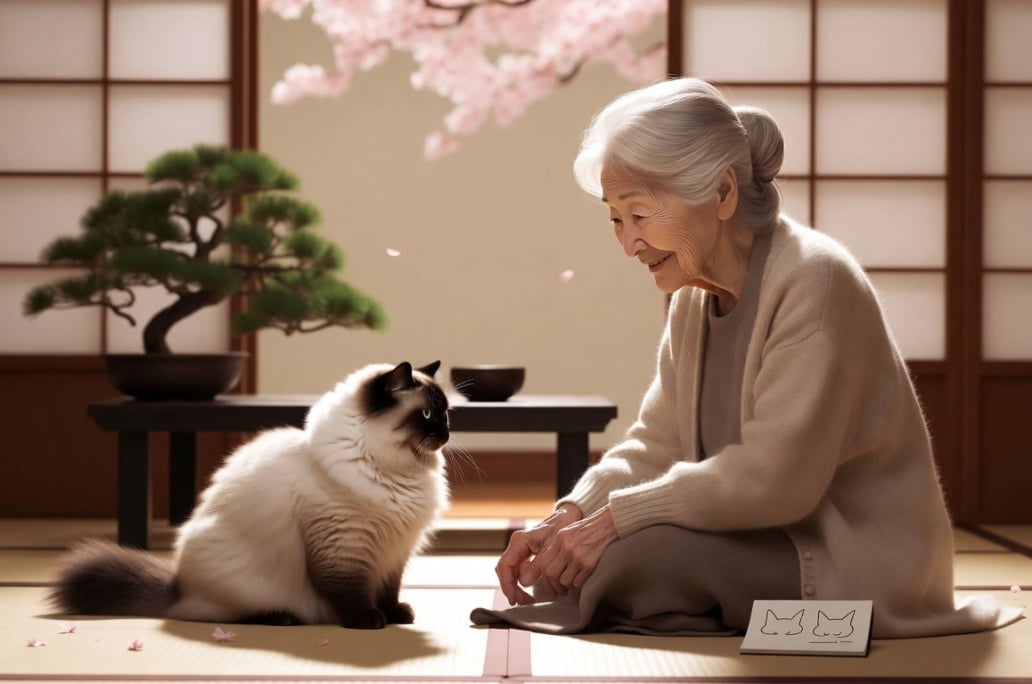
Reading Your Cat’s Silent Language: A Senior’s Guide
Cats communicate mostly without meows. For seniors new to pets for the elderly, a silent cat can feel mysterious or even worrisome. This guide was created to demystify communication with animals of the feline kind. Every tail flick, ear twist, and slow blink carries meaning. Understanding these signals transforms pet care from guessing into knowing. Seniors who learn cat language report fewer scratches, less stress, and deeper bonds. The benefits of communicating with animals start the moment you realize your cat has been talking to you all along—just without words. This knowledge turns anxiety into confidence.
The first and most useful signal is the slow blink. When a cat looks at you and slowly closes and opens its eyes, it is saying “I trust you.” This is pure communication with animals without sound. For seniors practicing pet care, returning a slow blink tells the cat that the feeling is mutual. The benefits of communicating with animals through eye contact are enormous: anxious cats relax, and seniors feel chosen rather than ignored. Pets for the elderly often choose a quiet senior precisely because they offer calm energy. Learning to blink slowly is free, easy, and works within one day of consistent practice.
Tail positions tell a clear story. A tail held high like a flag means a confident, friendly cat. A tail flicking back and forth signals irritation or overstimulation. Understanding this saves seniors from unwanted scratches during pet care sessions. Communication with animals through tail observation allows you to stop petting before the cat becomes upset. The benefits of communicating with animals here are practical: fewer injuries, less fear, and happier interactions. Pets for the elderly who are cats appreciate when humans respect their limits. A senior who reads tail language becomes a trusted figure, not a stressful one.
Ear positions are another silent clue. Forward-facing ears mean curiosity and comfort. Flattened ears (often called “airplane ears”) mean fear or annoyance. Seniors providing pet care at home should pause any handling when ears go flat. Communication with animals works best when you listen with your eyes first. The benefits of communicating with animals in this way include preventing bites and preserving the senior’s confidence. Pets for the elderly who feel heard—even silently—become more affectionate over time. A cat that once hid under the bed may start sitting on the senior’s lap within weeks simply because the senior stopped making it feel trapped.
Vocalizations also carry meaning, though cats use meows mostly for humans. A short, high-pitched meow often means “hello” or “pay attention.” A long, low meow can mean complaint or discomfort. Communication with animals through voice tone helps seniors troubleshoot pet care issues. Is the water bowl empty? Is the litter box dirty? The benefits of communicating with animals vocally include solving small problems before they become big ones. Pets for the elderly who meow in different ways are not being demanding—they are being helpful. Seniors who learn these differences gain a sense of mastery and competence.
Finally, the language of touch and proximity matters. A cat that kneads on a senior’s lap is showing deep contentment—this behavior originates from kittenhood. A cat that sits nearby but not on the lap still enjoys communication with animals through presence alone. Pet care for seniors should never force cuddles. Respecting a cat’s choice to come and go freely builds lasting trust. The benefits of communicating with animals through patience are immense: cats of pets for the elderly become more affectionate precisely because they are never trapped. One 82-year-old reader told us that after learning these signals, her cat started sleeping on her bed every night. Silent language, when understood, speaks louder than any word.