Low-Cost Comfort: Making Any Home Pet-Ready
Many seniors worry that welcoming pets for the elderly into their lives requires expensive beds, toys, and equipment. This article proves the opposite. Communication with animals does not depend on price tags. Simple, recycled, and handmade items work just as well for pet care as luxury products. The benefits of communicating with animals emerge from attention and consistency, not from how much money you spend. A cardboard box can become a castle. An old towel can become a throne. Seniors on fixed incomes can absolutely provide excellent pet care without stress. This guide shares five low-cost solutions that any senior can create in under an hour.
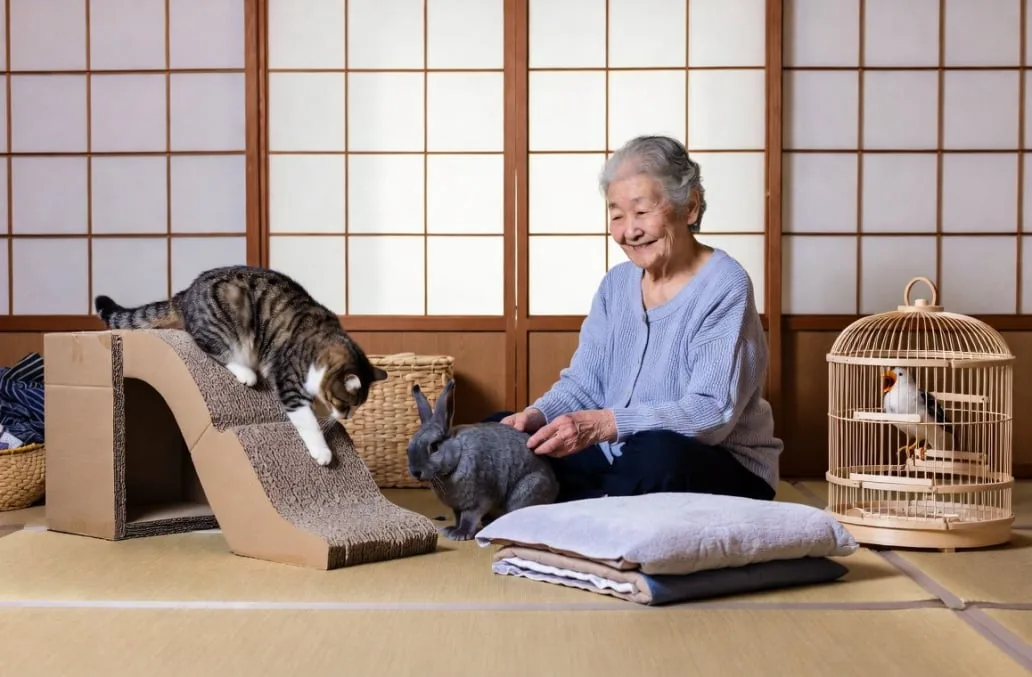
The first project is a homemade pet bed. Take an old sweater or fleece jacket, stuff it with soft rags or worn-out t-shirts, and sew or pin the edges shut. That is it. Pets for the elderly love these because the fabric carries familiar smells from the senior’s home. Communication with animals through scent is powerful and costs nothing. For seniors who no longer sew, simply folding several towels into a square works just as well. Pet care does not require a store-bought bed. The benefits of communicating with animals through a handmade bed include faster bonding—the pet associates the senior’s scent with safety and warmth.
The second idea is a scratching post for cats made from recycled cardboard. Cut strips of corrugated cardboard, stack them tightly, and glue or tape them together. Communication with animals works better when a cat has a legal place to scratch instead of your furniture. Pets for the elderly who are cats need this outlet to stay calm. The benefits of communicating with animals include fewer behavioral issues when the pet’s natural needs are met. Pet care on a budget is entirely possible. One senior in Yokohama built a scratching pad from an old shipping box and her cat has not touched the sofa in six months. Small efforts yield big peace.
Third, create simple enrichment toys without spending a yen. A plastic water bottle with a few dry beans inside becomes a rolling noisemaker. A toilet paper tube folded at both ends with a treat inside becomes a puzzle. Communication with animals through play strengthens bonds. Pets for the elderly who are dogs or cats both enjoy guessing games. The benefits of communicating with animals in play include mental stimulation for the pet and light physical activity for the senior. Pet care that includes play reduces depression on both ends of the leash. One 76-year-old reader fills a muffin tin with crumpled paper and hides kibble underneath—her small dog spends twenty minutes happily sniffing and digging.
Fourth, make a heating pad replacement for older pets who feel cold. Take a thick cotton sock, fill it with uncooked rice, tie the end, and microwave for 45 seconds. This warm pack stays warm for an hour. Pets for the elderly with arthritis benefit greatly from gentle warmth. Communication with animals through comfort care tells the pet that you understand their pain. The benefits of communicating with animals here are especially visible in winter. Pet care that includes warmth management shows a senior’s deep attention. One senior in Hokkaido makes two rice socks every evening—one for her cat and one for her own sore knees. Shared warmth becomes shared ritual.
Finally, build a feeding station from a shoebox to reduce mess and neck strain. Cut a hole in the front of the box large enough for the pet’s head. Place the food bowl inside. Pets for the elderly who are small dogs or cats eat more comfortably with raised or enclosed stations. Communication with animals includes observing how your pet eats. If kibble scatters everywhere, adjust the design. The benefits of communicating with animals through observation lead to better pet care decisions. A shoebox, a few cuts with scissors, and ten minutes of effort solve a problem that might otherwise frustrate a senior for months. Low-cost comfort is not about being cheap—it is about being clever and kind.